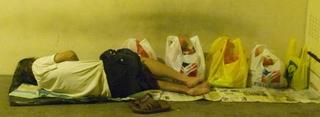
 "This careful attention to meeting the physical and material needs of the population is matched by equal care and concern for the people's social and spiritual needs. In this, however, Singapore has consciously moved away from the welfare-state prescriptions of OECD societies. There are no homeless, destitute or starving people in Singapore. Poverty has been eradicated, not through an entitlements program (there are virtually none) but through a unique partnership between the government, corporate citizens, self-help groups and voluntary initiatives. The state acts as the catalyst--matching financial support, sponsoring preventive and social care, and ensuring that basic needs are provided for. Remarkably, the poorest 5 percent of households have about the same levels of ownership of homes, television sets, refrigerators, telephones, washing machines and video recorders as the national average. Perhaps this, combined with the tough law-and-order regime, explains why Singapore has one of the lowest crime rates in the world."
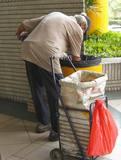
 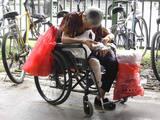 Thus there is this myth that Singapore is a rich country and its citizens are well-taken care of. Nothing could be further from the truth. The 1998 United Nations Human Development Index showed that Singapore ranked 28 on the list behind countries like Barbados and Malta.
One reason why the poor in Singapore are not more visible is that the Ministry of Community Development and Sports conduct frequent raids through its Destitute Persons Service, looking for and picking up vagrants. If Singapore seems to have less destitute, it is not because the numbers are not present. The real reason is that the Singapore Government is just much more efficient in clearing the streets of homeless people.
Below are some statistical indicators of the poor in Singapore:
In 1999, nearly 2,000 children did not attend school because their parents could not afford it. Mohammad Hirwan was one such child. His parents earned about $1000 a month, hardly sufficient for a family in Singapore. As a result the boy's parents had to take him out of school when he was nine. His siblings did not fare any better. All of them dropped out of school because of poverty.
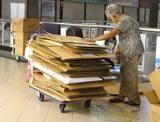 In 1990, the richest 10 percent of households earned 15.6 times more than the poorest 10 percent. (Households with no income-earners are excluded from this category.) By 2000, the gap widened: the richest 10 percent earned 36 times more than the poorest 10 percent. The average household income of the bottom decile decreased by 48.4 per cent, while the overall decrease was only 2.7 per cent.
According to the 2000 Census, 12.6 per cent of households earned less than $1,000 per month. A monthly gross total household income of $1,500 and below is considered “poor” in Singapore.
A more recent survey found that 16 per cent of the respondents had family members who often went hungry.
In 2003, a study found that Singaporeans aged between 20 and 49 years made up 70 percent of suicide cases from 1997 to 2001. They also constitute the main bulk of cases of attempted suicides. A newspaper report highlighted that more people are being diagnosed with mental disorders due to financial woes.
The unemployment rate for the bottom 10 per cent increased from 28.2 per cent in 1998 to 44 per cent in 1999 - an increase of about 56 per cent compared to 42 per cent for the total labour force.
In 2004 it was recorded 37,823 households could not afford to buy their own flats or rent homes in the open market. The latest inflation data for Singapore shows that the rise in consumer prices for the lowest 20 per cent income group was more than seven times that of the top 20 per cent income group.